




92a8f765dbcb40bd8b923226cafe5bc2)
554f0c9efded4b2c8f89c2656650ef44)
The return of Chinese exports and disinflationary force
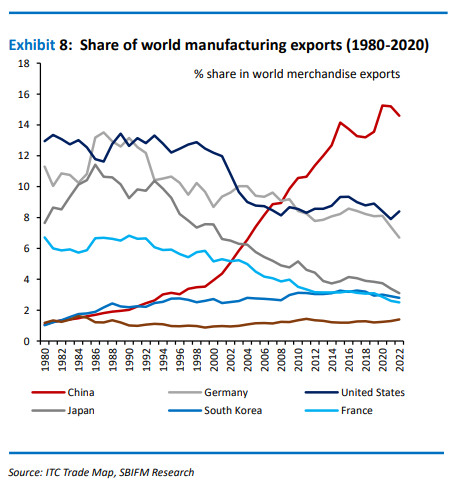
The prevalent narrative is around shifting of manufacturing capacities out of China with the objective of reducing the world’s dependency on Chinese exports. If this were to be playing out, then there should be some signs of slowing exports out of China or a loss in market share for Chinese exports. Initial data seems to suggest otherwise.
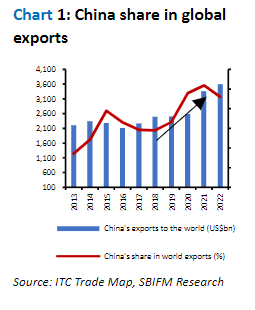
Contrary to the running rhetoric of China +1, China has recently gained exports market share by 1.7% pt. in last five years (Chart 1). Over the past 5 years, China’s exports mix has also shifted away from consumer goods and increasingly towards capital goods.
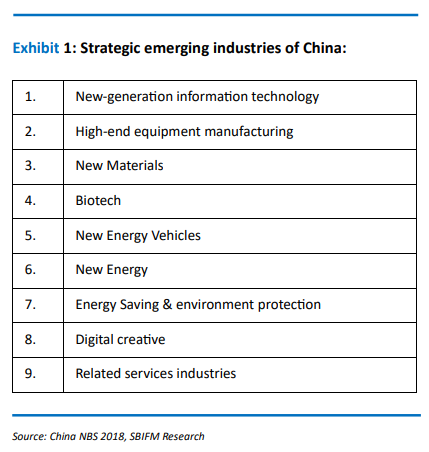
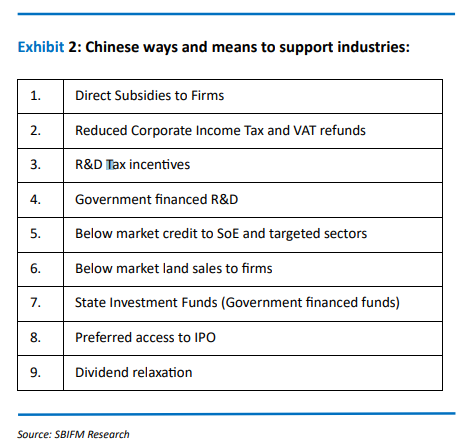
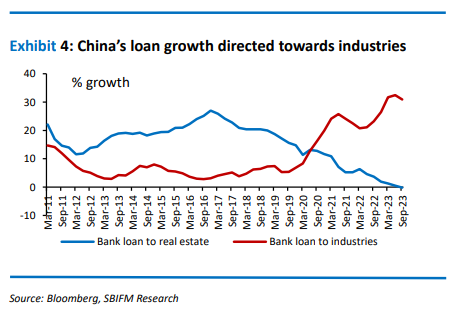
China is investing significant resources towards its industrial policy, more so post COVID. The Chinese government has identified a few strategic sectors, specifically in the realm of new age industries, and has gone all out in terms of tax breaks, subsidies, preferential access to funding and state support to accelerate manufacturing sector investment and production.
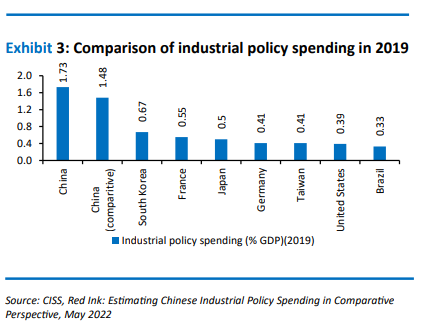
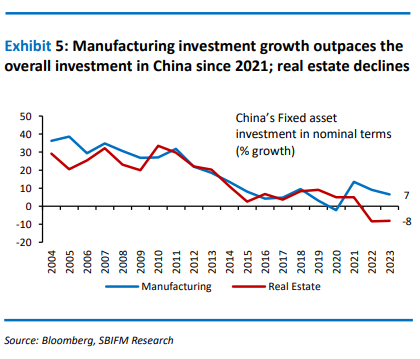
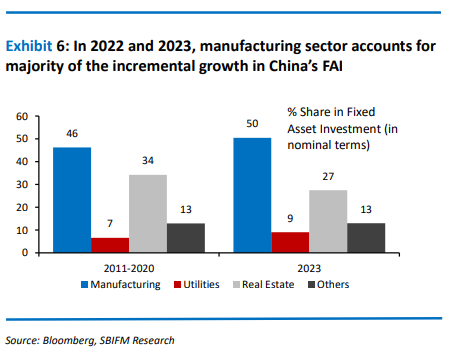
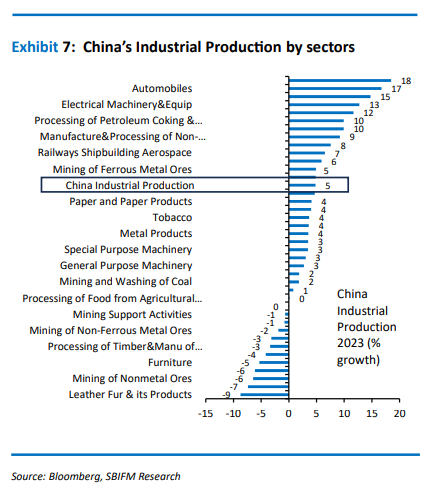
China spends far more on supporting its industries than most other key economies. And consequently, we can see significant capacity addition and production out-performance in the automobiles, electrical machinery, chemicals, nonferrous metals, railway shipbuilding and aerospace sectors. Gradually, the production capacity is outpacing the demand, leading to reduced capacity utilization in a few sectors. At the current pace of industrial capex push, the problem of overcapacity could accentuate in the future. And hence, Chinese manufacturers with excess capacity coupled with cost advantages will have adequate incentive and capability to be price competitive.
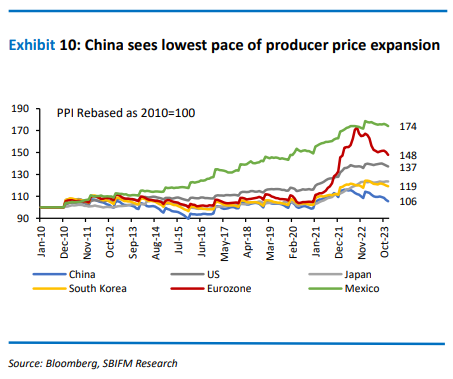
This means that at least one of the factors (i.e. China’s cheap exports) that contributed to structurally lower inflation over the past two decades is not going away, and potentially even getting stronger.
Today, globally, policy making is focused on the industrial capex. Knowing the competition is critical for India while designing its policy framework and for us as an investor while riding on the manufacturing sector and industrial capex theme. Some of the sectors like electric vehicles, solar-panels, semiconductors, and other high-end equipment manufacturing may face stiff competition from increased Chinese supply in the future. At the same time China is indeed vacating the space in some of the low value consumer products.
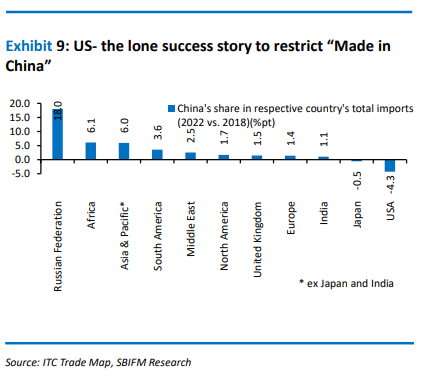
Secondly, China +1 has so far been a limited exports opportunity for India. It provided an increased market share gain in the US market. But more than the China+1 policies or shift in sourcing, there has been the reduced industrial production in Germany and few other European countries (probably driven by the energy crisis post the Russia-Ukraine war) which has played out favourably for Indian exporters.
Third, we often debate on industrial policy support and whether taxpayers should subsidize ‘rich’ businesses. In today’s environment, if Indian manufacturers do not receive sufficient policy support, perhaps the Chinese manufacturing process could hollow out India’s production potential and leave India as a permanent import dependent and current account deficit nation. No nation is playing by the fair rule of comparative advantage. In fact, we find that other countries (both US, and China) have increased support to R&D spending by the industries. Perhaps, India could also design our policy with a greater bias towards innovation.
China officially launched its policy prioritization of emerging industries in 2010, and within a decade, it has become one of the major players in a wide range of cutting-edge technologies such as green energy, 5G telecommunications, and the manufacturing of various industrial equipment. Now, with the Chinese real estate sector on a clear decline and the United States blocking the availability of select technology intensive products to Chinese manufacturers, China has doubled down on expanding its manufacturing sector’s capabilities.
At present, India is promoting its manufacturing sector largely by providing a subsidy to a specific set of companies in identified sectors. The subsidy grants are conditional on yearly milestones in investment, production, and domestic value addition in specific cases (see SBIFM Market Insights July 2023, A manufacturing renaissance?).. On the other hand, China has gone all out and appears much more aggressive than other countries in its industrial policy support (Exhibit 3). As a share of GDP, China spends over twice as much as South Korea on its industrial policy. And in dollar terms, China spends more than twice as much as done by the United States (as of 2019) 2


)
)