

Join Us language change  image
A+ A- A
Light Dark
×

What are Value Funds: Benefits & Investment Strategy


Published
Blog Image Blog Image

All About Value Funds: Strategy, Benefits & Factors to Consider Before Investing

Beyond asset class, mutual funds can also be classified by their investment strategy and style. Equity Mutual funds are often segmented based on the valuation approach used in stock selection—commonly into growth, value, and contrarian categories. Growth funds focus on stocks with momentum and strong earnings potential to beat the market, whereas value and contrarian funds target underperforming or undervalued stocks that are expected to rebound over time. This discussion will focus on value funds.

What are value funds

Value funds identify stocks that are currently undervalued but are expected to perform well over time as the potential value is unlocked. These funds are equity mutual funds that use fundamental analysis—examining metrics such as price-to-earnings (P/E) and price-to-book (P/B) ratios—to identify quality companies trading at a discount.

Investment Strategy

Value funds are actively managed with a disciplined, value-oriented and top-down approach that typically involves:

  • Fundamental Analysis: Value funds use detailed financial analysis to assess a company's fundamentals, such as earnings, revenue, and cash flow, to determine its true worth.
  • Screening for Undervaluation: Managers look for stocks with low price-to-earnings (P/E), price-to-book (P/B), or other valuation ratios compared to their industry peers or historical averages.
  • Long-Term Perspective: Embracing a long-term investment horizon, allowing time for market corrections to unlock a stock’s true value.
  • Margin of Safety: Investing with a margin of safety is a key concept, meaning the stock is purchased at a significant discount to its estimated intrinsic value, reducing downside risk.

Benefits of Value Funds

  • Potential for Higher Returns: By investing in undervalued stocks, these funds offer the potential for substantial returns when the market eventually corrects the mispricing.
  • Lower Downside Risk: The margin of safety built into the investment decision can provide a buffer against market downturns, leading to lower downside risk.
  • Consistent Performance: Historically, value investing has been a proven strategy over the long term, often leading to more consistent performance in volatile markets.
  • Focus on Quality: Value funds tend to invest in fundamentally strong companies, which can add stability to your portfolio.

Factors to Consider Before Investing

  • Fund Manager’s Expertise: The success of a value fund largely depends on the manager’s ability to identify undervalued opportunities and maintain discipline during market fluctuations.
  • Valuation Metrics: Understand the criteria and metrics the fund uses to determine undervaluation. Familiarize yourself with ratios like P/E, P/B, and dividend yields.
  • Market Conditions: Value investing strategies can underperform during certain market cycles (e.g., in rapid growth or momentum-driven markets). Consider how market conditions might affect the fund’s performance.
  • Investment Horizon: Value investing usually requires a longer time frame to allow undervalued stocks to realize their potential, so ensure your timeline aligns with this strategy.
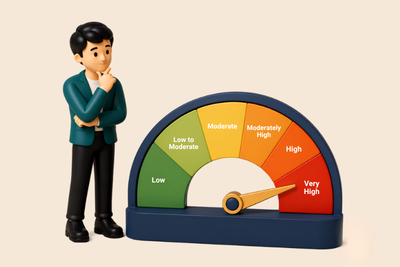
  • Risk Tolerance: Despite the margin of safety, value funds can experience significant volatility, so assess whether your risk appetite matches this approach.
  • Expense Ratios: Compare the fund's expense ratios and fees with similar funds to ensure that costs do not erode your potential returns.

Summarization

Value funds offer a disciplined, long-term approach by targeting undervalued stocks with strong fundamentals. They can provide attractive returns and lower downside risk through a margin of safety. However, investors should carefully consider the fund manager’s track record, prevailing market conditions, and their own investment horizon and risk tolerance before investing.

;