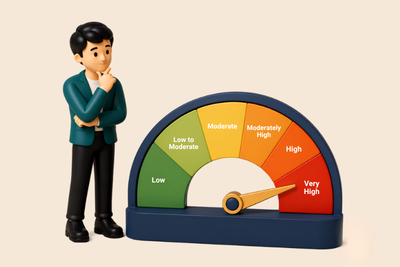
Paradox of Choice:
Have you ever found yourself overwhelmed in a supermarket
aisle where buying a mere shampoo has suddenly felt like a
humungous task because of the plethora of options available?
If you feel this confusion often, you have experienced a
phenomenon known as the paradox of choice. The paradox
suggests that while we may feel that having many choices
gives us the freedom to choose but having too many choices
actually limits our freedom as we are overwhelmed by the
options available.
I believe that the only thing that can help one out of this
paradox is knowledge. Once armed with the right kind of
knowledge about our actual needs, our confusion clears, and
we narrow down our options to a smaller size where making
the right choice becomes easier and the aisle at the
supermarket does not seem so intimidating.
Knowledge clears confusions:
Many a times, our choices are limited by the fact that there
is dearth of information, or difficulty in comprehending the
available information. Let us take the increasing number of
mutual fund products in the market that claim to be ESG
aligned. The assets under management of ESG funds have risen
multifold from INR 2,630 Cr in 2019 to INR 12,300 Cr in
2021! With such a spurt in funds catering to a particular
theme, it is understandable that retail investors may feel
baffled with the choices available. Let me try to address
the problems of why and how of ESG Funds and the eternal
question around comparability.
Why ESG?
We know that ESG funds aim at creating positive value not
only for the investors, but also for the larger stakeholders
and metrices of environment and society in the long-term.
The difficulty is understanding why a fund, whose primary
responsibility is to multiply an investor’s wealth would
look at ESG parameters. This can be answered by looking at
the push factors in the market. What inspires or rather
forces an organization to disclose more about its products?
Either it is regulations, market demand or the intention to
increase transparency (and consequently demand) about its
product. It is a combination of all these three within the
ESG Mutual fund industry today. The number of Indian
signatories to UNPRI have risen from 2 in 2018 to 28 in
2022. UNPRI expects transparency and encourages signatories
to provide all the information about their responsible
investment practices, methodologies, products, strategies
and targets in the public domain. So, clearly market
participants like the PRI have inspired investors to
increase transparency and expand the ESG product basket.
The Securities and Exchange Board of India (SEBI) has become
rather pro-active recently in mandating disclosures and
transparency from all quarters to ease the life of
investors. Whether it is in the form of mandatory Business
Responsibility and Sustainability Reporting (BRSRs) expected
from top 1000 listed companies by 2023, or the mandate for
adoption of Stewardship Codes and Stewardship Reporting by
mutual funds in 2020 and 2021 respectively, or it is
enhanced ESG based disclosures mandated by ESG Funds,
starting April 2022, the regulatory mandate has been a
definitive push towards more transparency in the industry.
How ESG?
The second difficulty is to understand how does a fund apply
ESG lens on its investments. ESG as a concept is quite
subjective and mere numbers and ratios would not help
explain the strategies adopted by an ESG Fund. Here, the
investors must understand their own preferences clearly
before deciding on a product. The first thing is to
understand what you do NOT wish to have in the product. Just
like you may not want a shampoo laden with chemicals like
sulfates, parabens, silicones etc. which may harm your hair,
similarly you have the choice to exclude certain sectors
from the funds.
For instance, most Indian ESG funds may exclude sectors with
negative social connotations like alcohol, tobacco,
gambling, and pornography with a threshold (sin stocks).
Similarly, many funds would look at excluding companies with
exposure in controversial weapons, animal cruelty or other
emerging topics like fossil fuels. This does not mean that
all ESG products have to follow an exclusion or negative
screening strategy. Here, the personal preference of an
investor comes into play. An investor following Shariah
based investing criteria, may choose a fund which does not
invest in alcohol, or a Catholic investor may look at a fund
that does not invest in industries related to abortion,
while another investor may not really look at exclusions at
all, and would prefer funds to choose from all sectors.
The second step is to try and assess how the funds are
promising to integrate ESG into their investment thesis.
Taking the shampoo analogy here, it might be good for one to
avoid harmful chemicals, but one may also want to know what
goes into the making of the product itself. In fund
parlance, some funds would integrate evaluation of ESG
performance and risks in the stock selection process itself,
a strategy known as ESG integration. Some other funds may
look at ESG ranking or scores of constituents and select the
best out of a set of companies, a strategy called
best-in-class. Some others would only invest in a certain
type of stocks that support a theme.
Think about a shampoo which only uses herbal ingredients,
similarly, a fund that only invests in say green energy
companies. This strategy is called thematic investing. Yet
others may look at a larger goal and look at creating a
positive impact through the fund. In shampoo analogy, you
may look at products from small cooperatives which sell
hand-made soaps and shampoos where the money goes for their
benefits. These funds align themselves to goals like
Sustainable Development Goals (SDGs) or the Paris Climate
Agreement and only invest in a certain type of companies
that cater to the larger goals. They are called funds with
sustainability objectives or impact funds. It is important
for the investor to understand the process and the larger
objective the process aims at achieving in order to see what
product is best suited to an investor’s preference. Unless
the strategies are known and understood, finding the right
tune that soothes the ears would seem difficult amongst the
noise of subjective information available about the funds.
The abstract of comparability:
Let us look at a few imaginary funds for context. Fund A
only excludes sin stocks like alcohol, tobacco, gambling and
pornography. Fund B excludes all sin stocks and also fossil
fuels and animal cruelty. It also checks the ESG
ratings/scores of all its constituents. Fund C is a Shariah
fund which invests based on Islamic principles. Fund D
invests only in renewable energy companies and also checks
ESG scores of underlying constituents. Fund D is also
aligned to Paris Climate Agreement. Fund E is a diversity
fund and funds only companies that have active diversity
promoting initiatives. Fund E is an SDG Fund. Fund F only
looks at ESG scores of underlying constituents. Fund G
excludes sin stocks and also looks at ESG scores of all
underlying constituents.
| Preference |
Negative Screening/ Exclusion |
Socially responsible |
Thematic |
Impact investing |
Sustainability Goals |
ESG integration |
| Fund A |
Fund B |
|
|
|
|
|
| Fund B |
Fund B |
Fund B |
|
|
|
Fund B |
| Fund C |
Fund C |
|
|
|
|
|
| Fund D |
|
|
Fund D |
|
Fund D |
Fund D |
| Fund E |
|
|
Fund E |
Fund E |
Fund E |
|
| Fund F |
|
|
|
|
|
|
| Fund G |
Fund G |
|
|
|
|
Fund G |
Looking at the table above, it seems difficult to understand
which fund is better. So, instead of trying to compare two
funds as products, one should try comparing the strategies
and objectives. If one wishes to exclude the sectors with
negative connotation and also integrate ESG across all the
constituents, maybe Fund G would be the right choice, but
that means that the universe for the fund manager would be
smaller compared to the other funds. If one wishes to only
integrate ESG across the constituents and does not wish to
exclude any specific sector, then Fund F would be the right
choice where stock selection has happened based on ESG
scores, but universe is not limited by exclusions. Fund F
may be rated BBB and Fund G may be rated 75. There is no
direct ESG based fund comparability possible (or even
required), because of the difference in inherent strategies
adopted by different funds and even in various methodologies
adopted for bottom up stock selection. Also, there is no
correlation between the ESG rating methodologies provided by
various ESG rating agencies.
In shampoo analogy yet again, you may have noted, custom
products emerging in the market, where your preferences are
asked in the beginning, and the products you get are
customized to your needs and requirements. Think of the ESG
funds in that light. It is an investor’s preference for a
strategy and objective of a fund that guides one’s choice.
It might so happen in the future that some sort of
standardization and comparability may emerge, but it would
still remain largely dictated by one’s preference.







a24d4f4ce48d4752b6b954c986e24d2c)
9e63095d77a449bdaf3b66dd6563c025)
)
)